
How to Choose a Commercial Real Estate Broker in Miami
Published · Updated · 7 min read
Selecting the right commercial real estate broker in Miami can significantly impact transaction outcomes, whether you are buying, selling, or leasing commercial property. The best brokers combine deep market knowledge, specialized asset-class expertise, and a proven track record of closing complex deals. This guide outlines the key criteria for evaluating and hiring a commercial real estate broker in the Miami market.
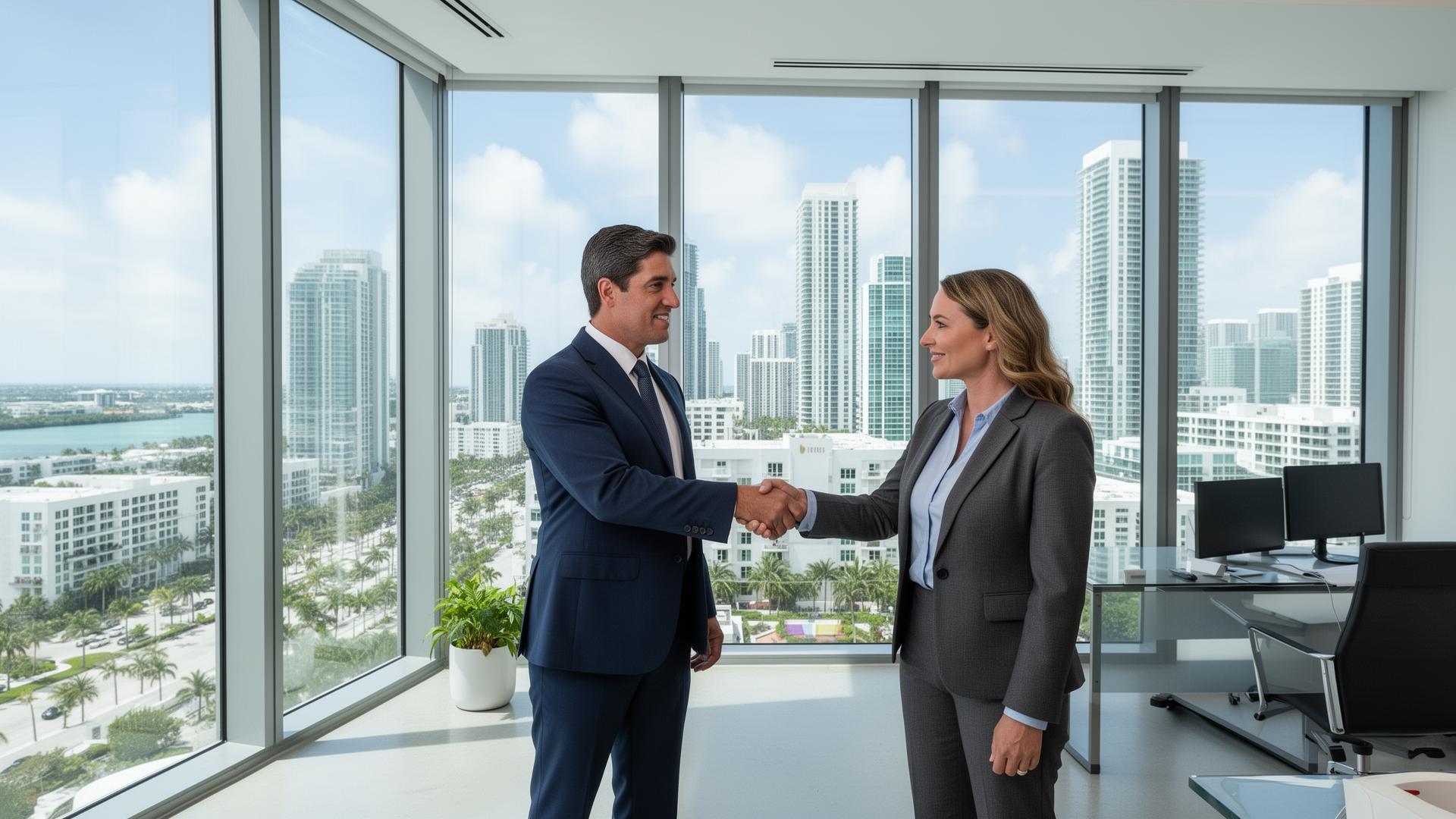
Why Broker Selection Matters in Commercial Real Estate
Commercial real estate transactions are inherently complex, involving significant capital, lengthy timelines, and intricate legal and financial structures. Unlike residential transactions, commercial deals require specialized knowledge of market dynamics, tenant credit analysis, lease structures, and investment underwriting.
The right broker can:
- Identify off-market opportunities not available through public channels
- Negotiate favorable terms that protect your financial interests
- Provide accurate market data and comparable transaction analysis
- Navigate zoning, environmental, and regulatory complexities
- Coordinate due diligence across legal, financial, and physical inspections
Conversely, an inexperienced or poorly matched broker can cost you hundreds of thousands of dollars through missed opportunities, weak negotiations, or inadequate market intelligence. For comprehensive brokerage services in Miami, explore our commercial real estate agents and brokers page.
Key Credentials and Licenses to Verify
Definition: A commercial real estate broker holds a state-issued real estate broker license and typically possesses additional professional designations that demonstrate specialized commercial expertise.
When evaluating a broker in Florida, verify the following:
- Florida Real Estate Broker License: Active and in good standing with the Florida Department of Business and Professional Regulation (DBPR)
- CCIM (Certified Commercial Investment Member): The premier designation for commercial investment professionals, requiring coursework in financial analysis, market analysis, and negotiation
- SIOR (Society of Industrial and Office Realtors): Recognizes top-performing industrial and office brokers nationally
- CPM (Certified Property Manager): Relevant for brokers involved in property management advisory
Beyond credentials, examine the broker's transaction history. Request a list of closed deals in the past 24 months, including property types, deal sizes, and client references. A broker who specializes in commercial realtor listings will have different strengths than one focused on investment advisory.
Specialization by Asset Class and Transaction Type
Commercial real estate encompasses diverse asset classes, each with unique market dynamics, tenant profiles, and valuation methodologies. The most effective brokers specialize in specific segments rather than attempting to cover all property types.
Common specializations include:
- Office: Class A/B office buildings, medical office, co-working conversions
- Industrial: Warehouses, distribution centers, flex space, cold storage
- Retail: Strip centers, single-tenant NNN, shopping centers, restaurant pads
- Multifamily: Apartment buildings, student housing, affordable housing
- Land: Development sites, assemblage, entitlements
Additionally, brokers typically focus on either investment sales (buying and selling) or leasing. Understanding the distinction between leasing brokerage and investment sales brokerage will help you identify the right professional for your specific needs.
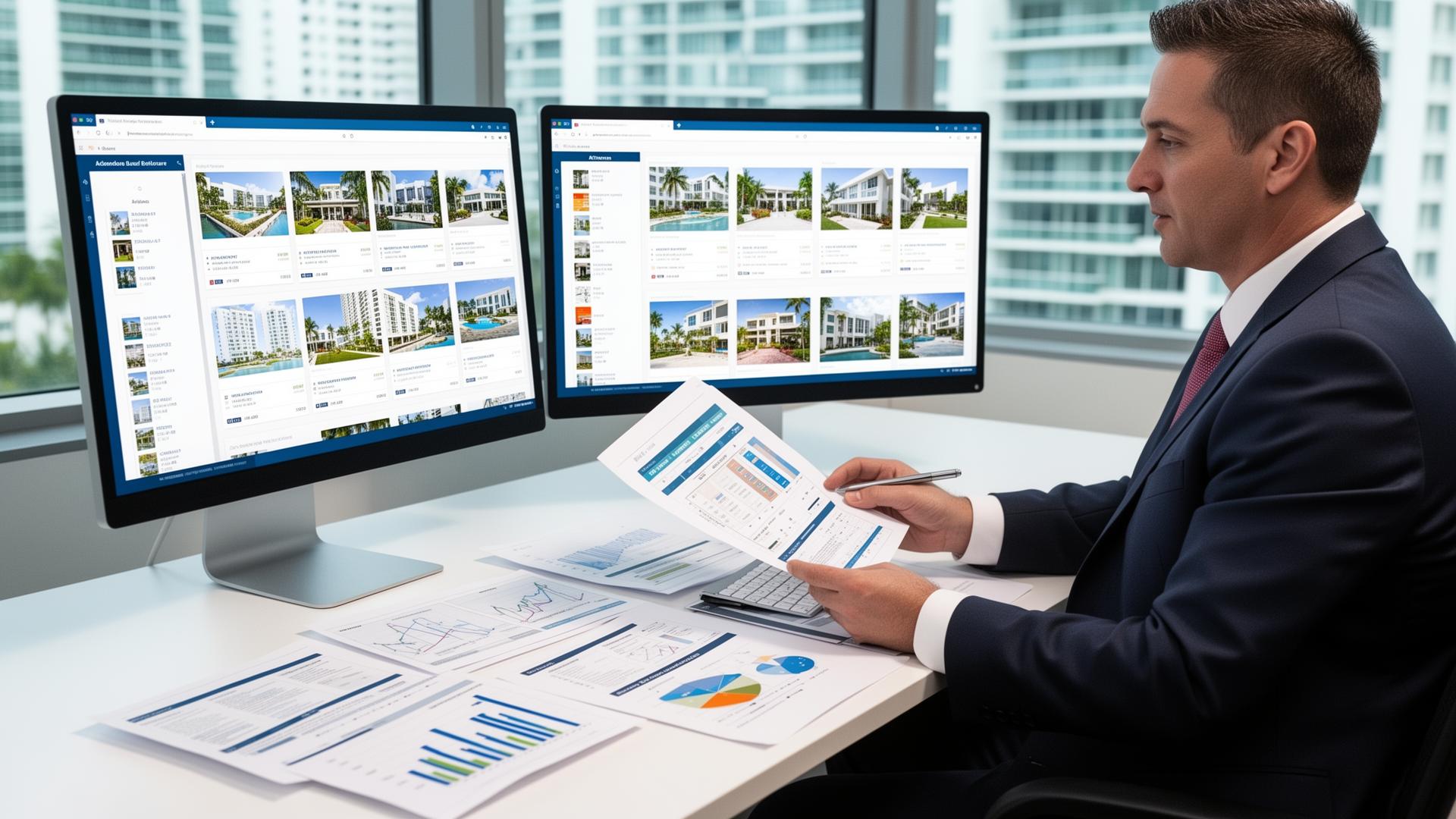
Evaluating Market Knowledge and Local Expertise
Miami's commercial real estate market is highly localized, with significant variations in pricing, demand, and regulatory environments across neighborhoods. A broker's value is directly proportional to their depth of local market knowledge.
Questions to assess market expertise:
- What are current cap rates for this asset class in this submarket?
- What recent comparable transactions have closed within a one-mile radius?
- What zoning changes or infrastructure projects may impact property values?
- Who are the most active buyers and tenants in this market segment?
- What is the current vacancy rate and absorption trend for this property type?
Brokers with deep roots in specific neighborhoods like Brickell, Doral, or Coral Gables will have relationships and insights that generalist brokers simply cannot match.
Commission Structures and Fee Arrangements
Definition: A brokerage commission is the fee paid to real estate brokers for facilitating a transaction, typically calculated as a percentage of the sale price or total lease value.
Understanding commission structures is essential for evaluating broker proposals:
- Investment sales: Fees are negotiated based on property type, transaction complexity, and scope of services, and are set out in a written agreement.
- Leasing: Fees are negotiated based on lease term, total lease value, and scope of representation for new leases or renewals.
- Buyer representation: Fee terms are negotiated and established in a written representation agreement, specifying how compensation is handled between the parties and any cooperating brokers.
Some brokers offer flat-fee or tiered commission structures for repeat clients or portfolio transactions. Always negotiate commission terms in writing before engaging a broker, and understand how fees are split between listing and cooperating brokers.
For a deeper understanding of how different brokerage models compare, read our analysis of commercial real estate agents versus investment advisors.
Red Flags When Selecting a Commercial Broker
Not all brokers deliver equal value. Watch for these warning signs during the selection process:
- Limited transaction history: Fewer than 5 closed commercial deals in the past 12 months
- No asset-class focus: Claims expertise across all property types without demonstrable specialization
- Poor communication: Slow response times, vague market data, or reluctance to provide references
- Undisclosed representation: Under Florida law, dual agency is prohibited; brokers working with both parties must operate under authorized brokerage relationships with appropriate written disclosure
- Pressure tactics: Pushing for quick decisions without adequate due diligence time
- No institutional relationships: Lack of connections with lenders, attorneys, and other transaction professionals
Experienced commercial brokers in Miami operate as trusted advisors, not salespeople. They prioritize long-term client relationships over short-term commissions. Learn more about strategic advisory in our guide on real estate advisors in Miami.
Interview Questions for Prospective Brokers
Prepare a structured interview process when evaluating brokers. The following questions will help you assess competence and fit:
- What is your primary asset-class specialization, and what percentage of your business does it represent?
- Can you provide three client references from transactions completed in the past 12 months?
- How do you source off-market opportunities for your clients?
- What technology platforms and data sources do you use for market analysis?
- How will you communicate with me throughout the transaction process?
- What is your proposed marketing strategy (for sellers) or search methodology (for buyers)?
- How do you handle conflicts of interest or dual agency situations?
Document the responses and compare across multiple brokers before making a decision. The best broker for your needs will demonstrate both technical expertise and alignment with your investment objectives.
Why Work with a Full-Service Commercial Brokerage
Full-service commercial brokerages offer integrated capabilities that solo practitioners or boutique firms may not provide. These include market research departments, in-house legal review, property management consulting, and institutional investor networks.
Advantages of full-service firms:
- Access to proprietary deal flow and institutional buyer/tenant networks
- Comprehensive market reports and data analytics
- Coordinated advisory across acquisition, disposition, and leasing strategies
- Stronger negotiating leverage through firm reputation and deal volume
- Seamless transition between property sales and leasing services
Supreme Capital Commercial Real Estate Miami provides full-service brokerage with deep specialization across all major asset classes and Miami submarkets. Contact our team to discuss your commercial real estate needs.
Related Resources
Frequently Asked Questions
How do I find a good commercial real estate broker in Miami?
Look for brokers with active Florida licenses (verifiable through the DBPR), relevant designations (CCIM, SIOR), asset-class specialization matching your needs, and a demonstrated track record of closed transactions in your target submarket and property type.
Interview multiple candidates, request recent client references, and evaluate their knowledge of specific submarkets like Brickell, Doral, or Coral Gables. The best brokers demonstrate deep market knowledge through specific comparable data and recent transaction examples rather than general market commentary.
What is the typical commission for a commercial real estate broker?
Commercial real estate brokerage commissions are not fixed or standardized. Fees are negotiated between the parties, depend on the scope of services and transaction complexity, and are set out in a written agreement.
Commission rates are negotiable and should be discussed transparently before engagement. Some brokers offer tiered structures that incentivize higher sale prices or faster execution. For portfolio or repeat client relationships, negotiate volume-based commission reductions that benefit both parties over multiple transactions.
Should I use a buyer's broker for commercial real estate?
Yes. A dedicated buyer's broker provides exclusive representation, access to off-market deals through proprietary networks, and negotiation advocacy without the conflicts inherent in dual agency arrangements where one broker represents both buyer and seller.
Buyer representation is particularly valuable in competitive markets like Miami where off-market deal flow, speed of execution, and negotiation expertise directly impact acquisition pricing. Brokerage fees and compensation arrangements are negotiated, depend on the scope of services, and are set out in a written agreement.
What credentials should a commercial broker have?
Key credentials include a Florida Real Estate Broker License (verifiable through DBPR), CCIM designation for commercial investment expertise, and SIOR for industrial and office specialization. Transaction history in your specific asset class and submarket is equally important as formal credentials.
Beyond designations, evaluate the broker's institutional relationships—connections with lenders, attorneys, environmental consultants, and other transaction professionals indicate a mature practice. Brokers who can assemble and coordinate a full transaction team provide significantly more value than those focused solely on deal-making.
What is the difference between a commercial broker and an agent?
A broker holds an elevated license allowing them to operate independently, manage agents, and handle escrow funds. An agent works under a broker's supervision and cannot operate independently. Both can facilitate commercial transactions, but brokers typically have more experience, authority, and legal responsibility.
In practice, the distinction matters most for accountability and experience level. Working with a broker (rather than an agent working under a broker) typically provides more direct access to decision-making authority, deeper market expertise, and more efficient transaction management for complex commercial deals.
How long does a typical commercial real estate transaction take?
Timelines vary by property, financing and negotiated contract terms. Stages includes due diligence, financing approval, and closing preparation, each with negotiated deadlines. Complex deals involving environmental reviews, zoning approvals, or multi-party negotiations may take 6–12 months.
The pre-LOI phase—property identification, underwriting, and initial negotiation—can add 2–6 months to the total process. Sellers should plan for 4–8 months from listing to closing, while buyers should budget 3–6 months from initial search to acquisition completion depending on property type and complexity.