
Retail Space for Lease in Miami
Published · Updated · 8 min read
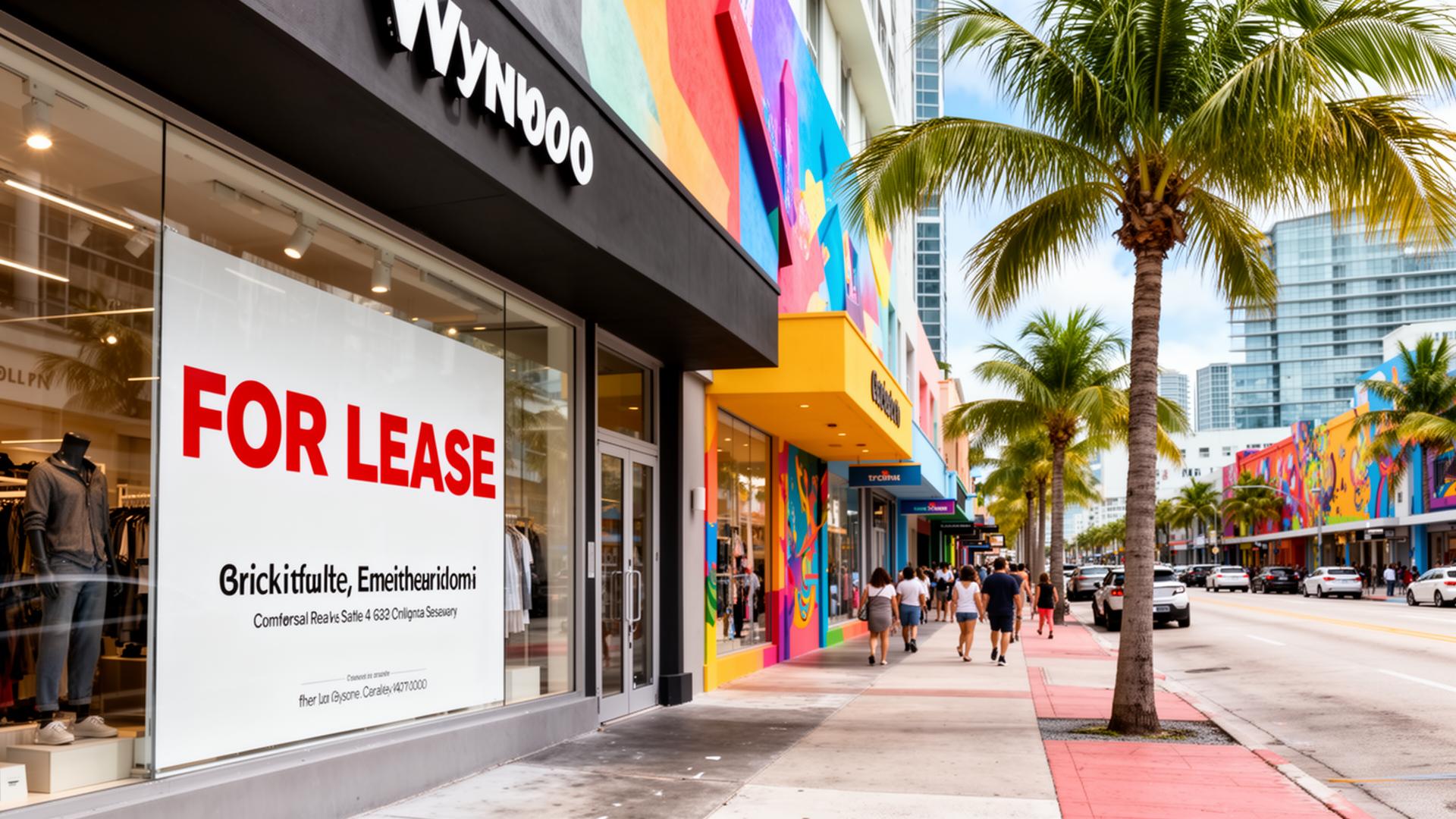
Commercial space for rent in Miami offers retail tenants access to one of the nation's most dynamic consumer markets, driven by dense population, international tourism, and diverse cultural spending patterns. From high-traffic corridors in Brickell and Wynwood to neighborhood strip centers in Doral and Hialeah, Miami's retail leasing market provides options for every concept and budget.
Miami's Retail Leasing Market: Key Metrics
Miami's retail leasing market reflects local vacancy, rents, tenant demand, and neighborhood conditions:
Market indicators:
- Average vacancy: Review current availability and recent leasing activity across Miami-Dade County
- Asking rents: Compare current asking rents by property type, location, and lease terms
- Rent growth: Review recent comparable leases and changes in asking rents
- Net absorption: Examine tenant move-ins and move-outs alongside new supply
Unique Miami demand drivers:
- Year-round tourism supporting hospitality and experiential retail
- Diverse international population creating demand for culturally specific concepts
- Dense urban neighborhoods with limited parking driving walk-in traffic
- Strong outdoor dining culture supporting restaurant concepts year-round
For comprehensive leasing options, visit commercial real estate for lease in Miami.
Top Retail Corridors and Submarkets in Miami
Retail location determines traffic, visibility, and ultimately business success. Miami's top retail corridors include:
Brickell (Mary Brickell Village, Brickell City Centre):
- Rents: Compare recent leases and account for location, visibility, and lease terms
- Traffic: Dense residential population + office workers
- Best for: Restaurants, fitness, professional services, boutique retail
- Rents: Compare recent leases and account for location, visibility, and lease terms
- Traffic: Tourism, art events, nightlife, local residents
- Best for: Experiential retail, galleries, restaurants, bars, fashion
Coral Gables (Miracle Mile / Ponce Circle):
- Rents: Compare recent leases and account for location, visibility, and lease terms
- Traffic: Affluent local residents + office workers
- Best for: Fine dining, upscale retail, professional services
Miami Beach (Lincoln Road / Collins Avenue):
- Rents: Compare recent leases and account for location, visibility, and lease terms
- Traffic: Heavy tourist foot traffic
- Best for: National brands, restaurants, entertainment, fashion
Neighborhood corridors (Hialeah, Doral, Kendall):
- Rents: Compare recent leases and account for location, visibility, and lease terms
- Traffic: Dense residential populations
- Best for: QSR, medical, services, grocery, convenience
Retail Lease Structures in Miami
Retail lease structures in Miami vary by property type and landlord preference:
NNN (Triple Net):
- Most common for strip centers and standalone retail
- Tenant pays base rent + taxes, insurance, CAM
- Total occupancy cost includes base rent and the tenant's share of expenses; review estimates and reconciliation terms
Percentage rent:
- Common in shopping centers and high-traffic locations
- Tenant pays base rent + percentage of gross sales above a breakpoint
- Percentage is negotiated and may depend on the retail category and lease terms
- Provides landlord with upside participation in tenant success
Gross lease:
- Less common for retail; used in some multi-story mixed-use buildings
- All expenses included in base rent
- Simpler for tenants but typically higher base rent
Understanding total occupancy cost—not just base rent—is critical for accurate budgeting. For negotiation guidance, see our guide on commercial lease negotiation in Florida.
What Retail Tenants Should Know Before Signing
Retail leases contain provisions that don't exist in office or industrial leases. Key items to understand:
Exclusive use clause:
- Prevents the landlord from leasing to competing businesses in the same center
- Critical for: Restaurants, salons, fitness studios, specialty retailers
- Define your exclusive broadly enough to protect against similar concepts
Co-tenancy clause:
- Provides rent reduction or termination right if an anchor tenant vacates
- Important in shopping centers where your traffic depends on anchor drawing power
Operating hours requirements:
- Shopping centers often require minimum operating hours
- Negotiate exceptions for holidays and seasonal adjustments
Signage rights:
- Building signage, monument signage, and window signage specifications
- Review municipal signage codes before committing
- Premium signage positions may require additional rent or negotiation
Build-to-suit vs. vanilla shell:
- Vanilla shell: Landlord delivers basic space; tenant completes interior buildout
- Build-to-suit: Landlord constructs space to tenant specifications (typically for credit tenants on long terms)
Landlord Retail Leasing Strategies in Miami
Miami landlords should implement strategic approaches to maximize retail property performance:
Tenant mix management:
- Balance anchor tenants (grocery, pharmacy) with inline tenants (restaurants, services)
- Avoid over-concentration in any single category
- Curate complementary tenants that drive cross-shopping
- Include food and beverage tenants for extended hours and foot traffic
Rent structure optimization:
- Use percentage rent clauses to participate in strong sales performance
- Implement annual escalations of 3% minimum to maintain income growth
- Offer reasonable TI to attract quality tenants while protecting returns
- Structure renewal options at fair market or slight premiums to market
Property presentation:
- Maintain high-quality common areas, signage, and landscaping
- Ensure adequate parking and lighting for customer safety
- Invest in facade improvements that attract foot traffic and tenant interest
For retail investment analysis, see our guide on retail strip investment in Miami.
Restaurant and Food Service Leasing Considerations
Restaurant leasing involves additional complexity beyond standard retail:
Infrastructure requirements:
- Grease trap: Requirements and installation costs depend on the operation and local rules
- Hood and exhaust system: Commercial kitchen ventilation; installation costs depend on the equipment and space
- Plumbing: 3-compartment sink, hand washing stations, floor drains
- Electrical capacity: 200–400 amp service typical for restaurant operations
- Gas service: Natural gas connection for cooking equipment
Permitting requirements in Miami-Dade:
- Health department inspection and permit
- Building permit for kitchen construction
- Fire suppression system approval
- Liquor license (separate application process; consider proximity restrictions)
- Outdoor dining permits (especially in Wynwood and Miami Beach)
The Miami-Dade County Zoning Department handles use approvals and building permits, while the Florida Department of Health oversees food service establishment licensing and inspection requirements.
Restaurant buildout costs depend on the space, equipment and permitting requirements, making TI negotiation and lease term particularly important for return on investment.
Medical and Professional Office Retail Space
Medical and professional offices increasingly occupy retail locations for visibility and patient/client accessibility:
Advantages of retail-located medical offices:
- Higher visibility drives walk-in and referral traffic
- Ground-floor access preferred by patients over office buildings
- Abundant parking in strip center locations
- Lower occupancy costs than medical office buildings in many cases
Common retail-located medical tenants:
- Urgent care centers and walk-in clinics
- Dental offices and orthodontists
- Optometry and vision centers
- Physical therapy and rehabilitation
- Dermatology and cosmetic services
Lease considerations for medical tenants:
- ADA compliance requirements for patient accessibility
- Specialized plumbing, electrical, and HVAC for medical equipment
- HIPAA privacy requirements affecting space layout
- TI costs depend on the specialized buildout; obtain contractor estimates
Supreme CRE: Retail Leasing Advisory in Miami
Supreme Capital Commercial Real Estate Miami provides specialized retail leasing services for tenants and landlords across Miami-Dade:
For tenants:
- Location analysis and site selection
- Lease negotiation with retail-specific expertise
- Exclusive use and co-tenancy clause negotiation
- Buildout coordination for restaurant and specialty retail
For landlords:
- Tenant mix strategy and leasing plan development
- Tenant sourcing and credit evaluation
- Percentage rent structuring and lease optimization
- Portfolio leasing management
Contact our commercial real estate brokers to discuss retail leasing opportunities in Miami.
Related Resources
Frequently Asked Questions
How much does retail space cost in Miami?
Strip center and prime corridor rents vary; review recent comparable lease data for each location. Total occupancy cost adds operating expenses (taxes, insurance, CAM) to base rent.
Retail rent levels vary dramatically by corridor, visibility, parking, and foot traffic. For example, a hypothetical $40/SF space on a high-traffic intersection may generate significantly more revenue than a $25/SF space on a secondary street, making location quality the dominant factor in retail site selection rather than rent per square foot alone.
What is a NNN lease for retail?
A NNN (triple net) lease generally requires the tenant to pay base rent plus the operating expenses the lease assigns, typically property taxes, insurance, and common area maintenance. It's the most common lease structure for strip centers and standalone retail in Miami, providing landlords with predictable net income and tenants with full transparency into occupancy costs.
When evaluating NNN retail leases, request current year operating expense breakdowns and review historical trends. Florida's rising property insurance costs have significantly increased the insurance component of NNN pass-throughs, making it critical to understand current and projected total occupancy costs before committing.
What is a percentage rent clause?
Percentage rent requires tenants to pay a percentage of gross sales (typically 4–8%) above a breakpoint in addition to base rent. It's common in shopping centers and high-traffic retail locations, providing the landlord with upside participation in tenant success while ensuring base rent covers the landlord's floor income.
The breakpoint is typically calculated as base rent divided by the percentage rate. For example, $50/SF base rent with a 6% clause creates a $833/SF natural breakpoint—percentage rent only kicks in if your sales exceed this threshold. Negotiate the breakpoint and percentage rate carefully, as they significantly impact your total occupancy cost in high-sales scenarios.
How long does retail buildout take in Miami?
Standard retail buildout takes 8–16 weeks after permitting. Restaurant buildout with full kitchen infrastructure takes 12–24 weeks. Permitting in Miami-Dade typically adds 4–8 weeks. Plan for a total timeline of 4–8 months from lease execution to grand opening.
Restaurant buildouts are particularly complex and expensive due to grease traps, hood systems, specialized plumbing, and health department requirements. Engaging a contractor experienced in Miami-Dade permitting and restaurant construction can reduce timeline and avoid costly change orders. Negotiate sufficient free rent to cover the buildout period when you cannot generate revenue.
What is an exclusive use clause?
An exclusive use clause prevents the landlord from leasing to competing businesses within the same property or shopping center. For example, a pizza restaurant might negotiate an exclusive against other pizza or Italian food concepts. These clauses are critical protections for retail tenants whose revenue depends on limited direct competition within their trade area.
Define your exclusive broadly enough to protect against similar concepts but narrowly enough to be enforceable. Overly broad exclusives (e.g., 'all food') may be rejected by landlords or deemed unenforceable. Include specific remedies for violation—typically rent reduction or termination rights—and ensure the clause applies to all current and future tenants in the property.
Do I need a broker to lease retail space?
While not legally required, professional tenant representation can help negotiate rent, TI allowances, rent concessions, and protective clauses like exclusives and co-tenancy provisions. Broker fees are negotiated, depend on scope, and are set out in a written agreement.
Retail leasing involves specialized provisions (exclusive use, co-tenancy, percentage rent, operating hours, signage rights) that don't exist in office or industrial leases. An experienced retail leasing broker understands which provisions are negotiable in current market conditions and how to structure them to protect your business interests throughout the lease term.