
Commercial Land for Lease: What Owners Should Know
Published · Updated · 8 min read
Commercial land for lease through ground lease structures offers landowners a unique opportunity to generate long-term passive income while retaining ownership of an appreciating asset. Ground leases in South Florida typically span 50–99 years, with tenants constructing and maintaining improvements while paying rent to the landowner. This guide covers ground lease structures, valuation, and strategies for landowners.
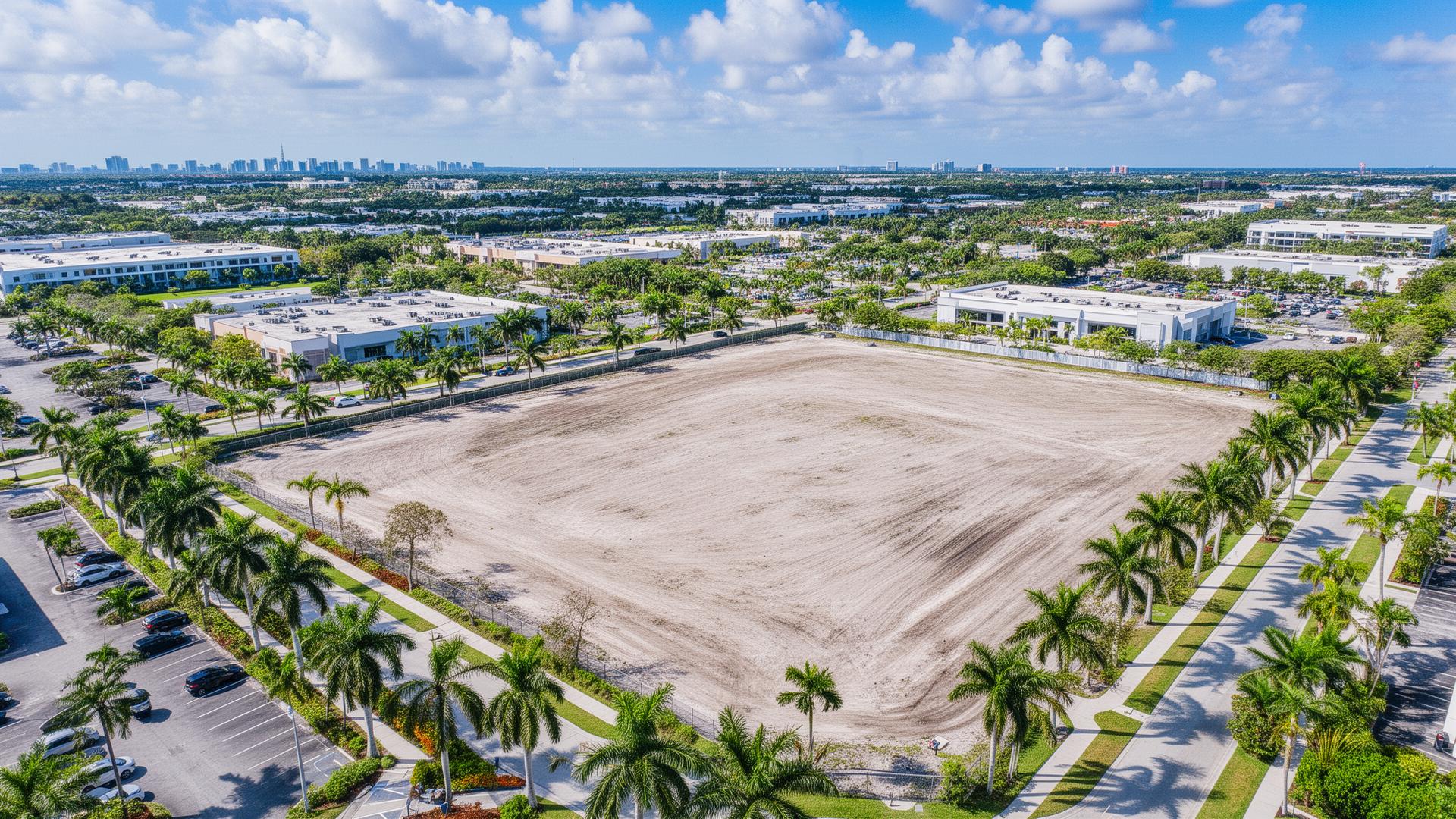
What Is a Ground Lease?
Definition: A ground lease is a long-term lease agreement where the landowner (lessor) leases vacant land to a tenant (lessee) who constructs, maintains, and operates improvements on the property. At lease expiration, the improvements typically revert to the landowner.
Key ground lease characteristics:
- Term: Typically 50–99 years, providing long-term income stability
- Improvements: Tenant finances and constructs all buildings and site improvements
- Ownership: Landowner retains fee simple ownership of the land throughout the lease
- Reversion: At lease expiration, improvements revert to landowner (unless negotiated otherwise)
- Rent structure: Fixed annual rent with periodic escalations or resets
- Subordination: Ground lease may be subordinated or unsubordinated to tenant's mortgage
Ground leases are increasingly used in South Florida's supply-constrained market where landowners prefer to retain ownership of appreciating land rather than selling it outright.
Advantages of Ground Leasing for Landowners
Ground leasing offers significant advantages over selling land outright:
Financial benefits:
- Retain ownership: Land remains in the owner's portfolio while generating income
- Passive income: Long-term, predictable cash flow with minimal management obligations
- Improvement reversion: At lease expiration, ownership of buildings may transfer to the landowner, depending on the lease terms
- Capital gains considerations: Retaining the land rather than selling it may affect the timing of capital gains; consult a qualified tax adviser
- Estate planning: Ground lease income stream can be structured for generational wealth transfer
Operational benefits:
- No construction risk—tenant bears all development costs
- No management responsibility—tenant maintains all improvements
- Bondable tenants provide credit-quality income stream
- Land remains in family or entity portfolio indefinitely
In South Florida, geographic supply constraints are one factor to consider when evaluating land value and ground leases.
Ground Lease Rent Structures
Ground lease rent structures vary based on location, tenant credit, and negotiation:
Fixed rent with periodic escalations:
- Base rent increases by fixed percentage (2–3%) annually or at set intervals (every 5–10 years)
- Provides predictability for both parties
- Risk: May not keep pace with actual land value appreciation in high-growth markets
Market rent resets:
- Rent adjusted to fair market land value at specified intervals (typically every 10–25 years)
- Protects landowner from below-market income over long-term lease
- May create tenant uncertainty about future occupancy costs
Percentage rent:
- Base rent plus percentage of tenant's gross revenue or property NOI
- Allows landowner to participate in property performance upside
- Most common for retail and hotel ground leases
Evaluating ground lease rent in Miami-Dade:
- Review recent comparable ground leases and location
- Consider tenant credit, lease term, escalations, and permitted uses
- Review county property appraiser records and seek a broker opinion of value
Ground Lease Valuation for Landowners
Ground lease valuation involves analyzing both the income stream and the residual (reversion) value:
Income value:
- Present value of ground rent payments over the remaining lease term
- Discount rate reflects credit quality, escalation structure, and market conditions
- Review comparable ground lease sales and tenant credit quality when assessing cap rates
Reversion value:
- Estimated value of land and improvements at lease expiration
- Discounted to present value at appropriate discount rate
- Longer remaining terms reduce present value of reversion significantly
Fee simple value comparison:
- Compare ground lease income stream against potential sale proceeds
- Consider how leasing instead of selling affects the timing of capital gains taxes; consult a qualified tax adviser
- Factor in land appreciation potential over the lease term
Professional appraisal is recommended for ground lease valuation given the complexity of long-term discounting and reversion analysis. Consult with commercial real estate brokers specializing in ground leases.
Subordination: The Most Critical Negotiation Point
Definition: Subordination refers to whether the ground lease (landowner's interest) is junior or senior to the tenant's mortgage lender. This single provision has the greatest impact on ground lease risk for landowners.
Unsubordinated ground lease (landowner-favorable):
- Landowner's interest is senior to tenant's mortgage
- If tenant defaults on mortgage, the lender cannot foreclose on the land
- Land is protected regardless of tenant's financial difficulties
- Disadvantage: Limits tenant's financing options and may reduce achievable rent
Subordinated ground lease (tenant-favorable):
- Landowner's interest is junior to tenant's mortgage
- Lender can foreclose on both improvements AND land if tenant defaults
- Higher risk for landowner but enables tenant to obtain more favorable financing
- May command higher ground rent to compensate landowner for increased risk
Recommendation: Landowners should generally resist subordination unless the tenant's credit quality and the rent premium justify the risk. If subordination is required, negotiate cure rights, notice provisions, and new lease protections.
Common Ground Lease Tenants in South Florida
Ground leases attract specific tenant profiles that can finance and construct their own improvements:
Retail/restaurant chains:
- Chick-fil-A, McDonald's, Starbucks, Wawa
- National pharmacy chains (CVS, Walgreens)
- Auto service (AutoZone, Jiffy Lube)
Developers:
- Multifamily developers seeking to reduce land basis
- Mixed-use developers in urban infill locations
- Hotel developers (Marriott, Hilton, IHG)
Institutional users:
- Hospitals and healthcare systems
- Universities and educational institutions
- Government agencies
Credit-quality ground lease tenants provide bondable income streams that trade at tight cap rates and maintain land value protection for owners.
Tax Benefits of Ground Leasing
Ground leasing may have different tax implications from selling land:
- No capital gains tax: Retaining ownership generally avoids a sale-related capital gain, though lease income may be taxable
- Depreciation for tenants: Tenants may be able to depreciate qualifying improvements they construct, subject to tax rules
- Estate planning: Ground lease income stream can be placed in trusts for generational wealth transfer
- Property tax basis: Assessed value depends on the property, improvements and applicable assessment rules
- Step-up at death: Heirs may receive a basis adjustment, subject to applicable tax law
The Florida Department of Revenue provides information on state tax considerations, while the Miami-Dade Property Appraiser provides assessed value data relevant to ground lease rent calculations. These tax considerations may be relevant for long-term family landholders and entities with significant embedded capital gains in their land holdings. Consult a qualified tax adviser and see IRS Publication 544.
Supreme CRE: Ground Lease Advisory in Miami
Supreme Capital Commercial Real Estate Miami provides expert advisory for landowners evaluating ground lease opportunities:
- Ground lease feasibility analysis and land valuation
- Tenant sourcing and credit evaluation
- Lease structuring and negotiation
- Subordination analysis and risk assessment
- Long-term income modeling and tax planning coordination
Contact our team to explore whether a ground lease structure maximizes the value of your South Florida land holding. View available commercial real estate for lease in Miami.
Related Resources
Frequently Asked Questions
What is a ground lease?
A ground lease is a long-term agreement (typically 50–99 years) where a landowner leases vacant land to a tenant who finances, constructs, and operates improvements on the property. The landowner retains fee simple ownership of the land, receives periodic rent payments, and gains ownership of all improvements at lease expiration.
Ground leases can allow South Florida landowners to retain ownership while generating rental income; future land values and lease terms vary. Tax treatment depends on the transaction; consult a qualified tax adviser.
How is ground lease rent calculated?
Ground rent is negotiated based on the land's value and lease terms. For example, applying a hypothetical annual rent of 5–10% to land valued at $2 million would generate $100,000–$200,000 in annual ground rent, with periodic escalations potentially addressing inflation and land value appreciation.
The specific rate depends on location, tenant credit quality, lease term length, subordination status, and the competitive market for ground lease capital. Investment-grade tenants on unsubordinated ground leases command lower annual rates because the income stream is considered very secure, while riskier structures with subordination command higher rates to compensate the landowner for increased risk.
What is subordination in a ground lease?
Subordination determines whether the landowner's interest is senior or junior to the tenant's mortgage lender. In an unsubordinated ground lease, the landowner's position is protected—if the tenant defaults on their mortgage, the lender cannot foreclose on the land. In a subordinated lease, the lender can foreclose on both the improvements and the underlying land.
Landowners should generally resist subordination unless the tenant's credit quality and the rent premium adequately compensate for the increased risk. If subordination is required to enable tenant financing, negotiate protective provisions including cure rights (ability to cure tenant defaults), notice requirements, and new lease provisions that protect the landowner's income stream even through a foreclosure event.
Is a ground lease better than selling the land?
Ground leasing can provide long-term income, retention of land appreciation potential, and reversion of improvements at lease expiration, depending on the lease terms. Selling provides immediate liquidity but may trigger taxes and permanently eliminates future ownership benefits.
The optimal choice depends on your financial objectives, tax situation, and time horizon. Landowners with significant embedded capital gains, long-term income needs, and estate planning objectives may consider ground leasing. Those needing immediate capital for reinvestment or facing urgent financial obligations may prefer an outright sale and, if eligible, a 1031 exchange into qualifying real estate. Consult a qualified tax adviser and review the IRS like-kind exchange guidance.
How long do ground leases last?
Ground leases typically range from 50–99 years to give tenants sufficient time to amortize their construction investment and generate adequate returns on their improvements. Shorter terms (30–50 years) are less common because they limit the tenant's ability to secure favorable construction financing with sufficient amortization runway.
Some ground leases include renewal options extending beyond the initial term, potentially creating perpetual tenancy arrangements. Landowners should carefully consider renewal provisions and their impact on reversion value—extended renewal options at below-market rates can significantly diminish the economic benefit of improvement reversion at lease expiration.
Who pays property taxes on a ground lease?
Ground lease structures typically assign property tax responsibility to the tenant as part of a NNN-type structure. The tenant pays taxes on both the land (as tenant) and the improvements they own during the lease term. This arrangement ensures the landowner receives net income without operating expense deductions.
Property tax obligations should be clearly defined in the ground lease document, including responsibility for appeals, assessment challenges, and tax rate changes. In Miami-Dade County, where property taxes represent a significant operating expense, the allocation of tax responsibility—and the ability to protest assessments—can materially impact both the landowner's net income and the tenant's total occupancy cost.