
Commercial Land Investment in South Florida
Published · Updated · 8 min read
Commercial land for sale in South Florida represents a finite and appreciating asset class, driven by the region's constrained geography, population growth, and development pressure. From entitled development sites in Miami-Dade to agricultural conversions in the Redland, land investment requires specialized expertise in zoning, entitlements, and highest-and-best-use analysis.
Why Commercial Land Is Scarce in South Florida
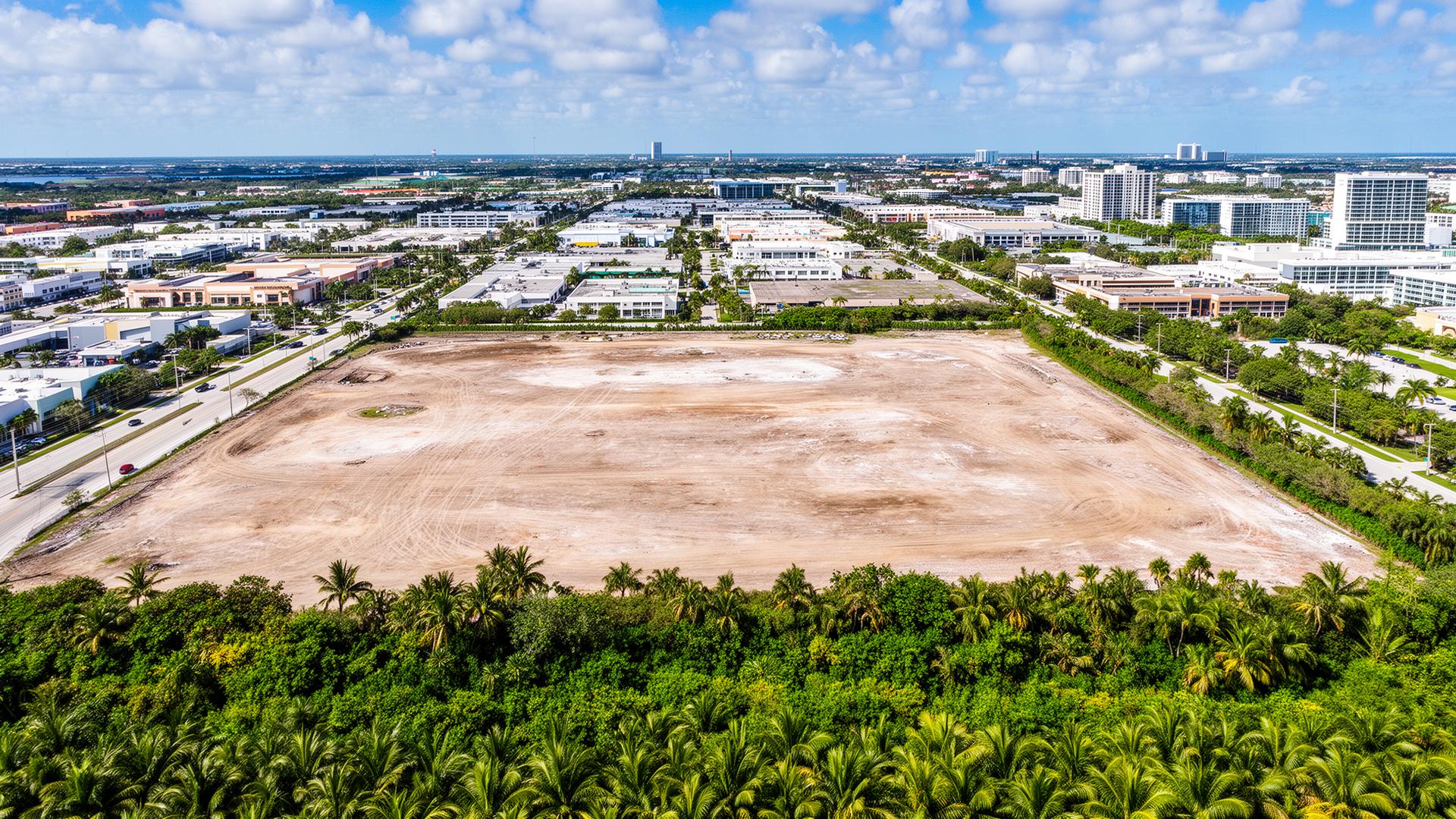
South Florida's geography fundamentally constrains available land supply. The Atlantic Ocean to the east, the Everglades to the west, and the Urban Development Boundary (UDB) create a natural growth limitation that doesn't exist in most U.S. markets.
Key supply constraints:
- Urban Development Boundary limits westward expansion in Miami-Dade
- Environmental protections restrict Everglades-adjacent development
- Coastal flood zones limit ground-up development without elevation
- Existing urbanization leaves few infill opportunities in core submarkets
- Agricultural land conversions face lengthy regulatory approval processes
The Miami-Dade County Zoning Department administers the Urban Development Boundary and land use regulations that govern where commercial development is permitted. This scarcity creates a favorable supply-demand dynamic for landowners and investors. As developable land diminishes, existing parcels appreciate—making commercial property for sale in Miami an increasingly valuable asset class. Investors should also reference the Miami-Dade Property Appraiser for parcel-level assessment data.
Types of Commercial Land Investments
Definition: Commercial land includes any parcel zoned or suited for non-residential development, including office, retail, industrial, multifamily, and mixed-use projects.
Common land investment categories:
- Entitled development sites: Land with approved zoning and permits for specific projects. Highest price but lowest entitlement risk.
- Raw land with development potential: Unentitled parcels requiring rezoning. Lower cost but longer timeline and approval risk.
- Infill parcels: Small to mid-size lots in established areas suited for redevelopment or build-to-suit projects.
- Agricultural conversion: Farmland near the UDB with potential for residential or mixed-use rezoning.
- Land banking: Long-term hold strategy anticipating future development pressure and appreciation.
Each category carries different risk-return profiles. Commercial land brokers specializing in South Florida can help identify opportunities aligned with investor objectives.
Zoning and Entitlement Analysis for Land Buyers
Zoning is an important factor in commercial land valuation. A parcel's entitled use directly determines its development potential and market value.
Key zoning categories in Miami-Dade:
- BU (Business): Office, retail, and commercial services
- IU (Industrial): Warehouse, manufacturing, and industrial uses
- RU (Residential): Multifamily and residential development
- GU (Interim): Temporary designation pending permanent zoning
- Mixed-Use/Special Districts: Planned developments with specific land use programs
Investors should engage experienced land use attorneys and commercial real estate brokers who understand Miami-Dade's zoning code and entitlement process. Rezoning applications can take 12–24 months and require public hearings, environmental review, and traffic impact analysis.
Land Valuation Methods in South Florida
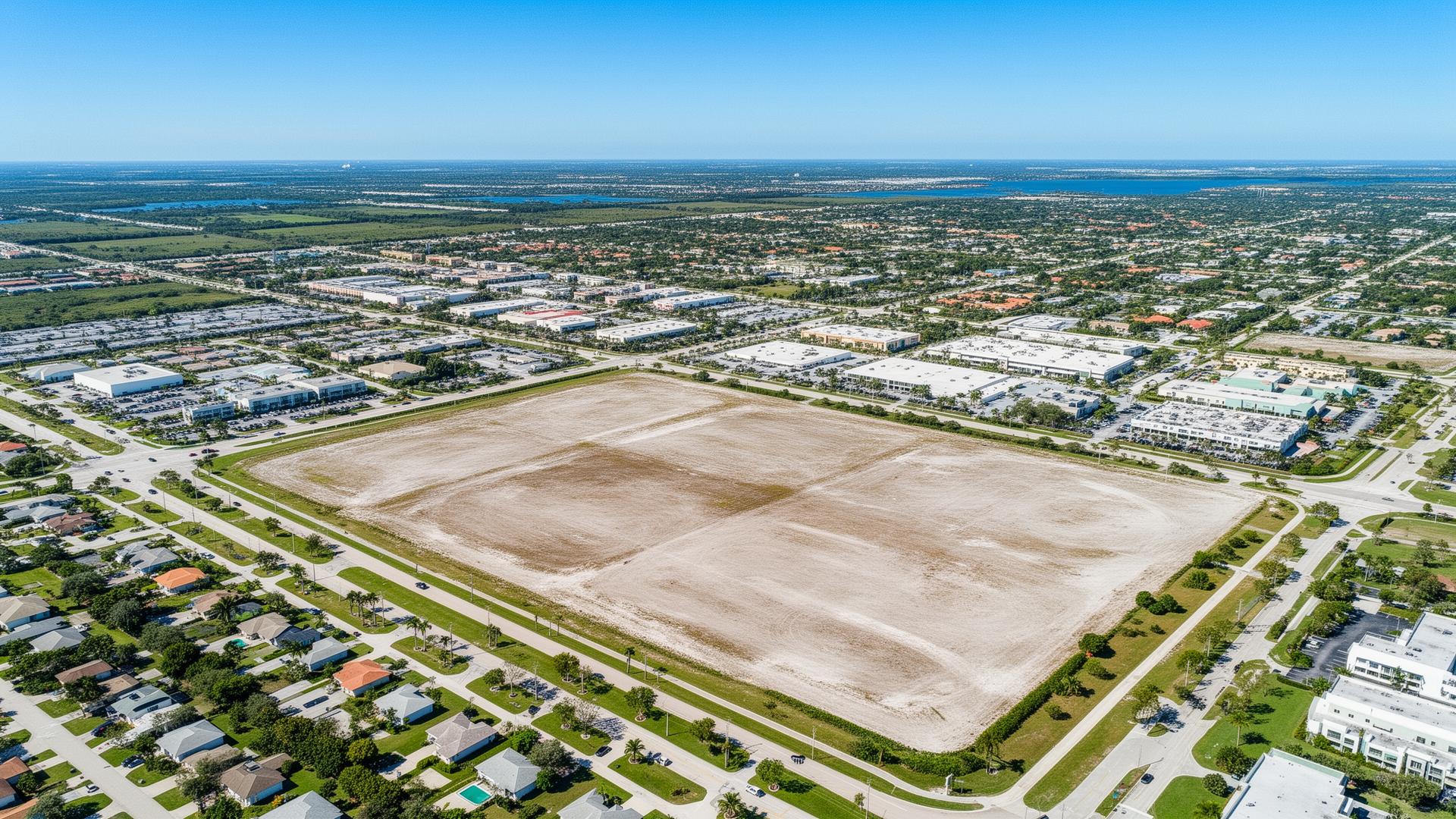
Commercial land valuation differs significantly from improved property valuation. Common approaches include:
- Comparable sales: Price per square foot or per acre based on recent transactions for similarly zoned land
- Residual land value: Calculated by subtracting construction costs and developer profit from the completed project value
- Income approach: For income-producing land (parking lots, ground leases), capitalized income stream
- Development potential: Value based on permitted density, FAR, and unit count
Land valuation considerations (Miami-Dade):
- Urban infill (Brickell/Downtown): Review zoning, permitted density, and recent comparable sales.
- Suburban commercial: Consider access, zoning, and recent comparable sales.
- Industrial zoned (Doral/Medley): Consider permitted uses, site access, and recent comparable sales.
- Agricultural/pre-development: Review permitted uses, development restrictions, and county property appraiser records.
Understanding commercial property valuation methodologies specific to land is essential for avoiding overpayment.
Environmental and Due Diligence Considerations
South Florida's environmental landscape creates unique due diligence requirements for land acquisitions:
- Phase I Environmental Site Assessment: Standard requirement identifying potential contamination
- Wetlands delineation: Required for parcels near protected wetlands or water bodies
- Flood zone analysis: FEMA flood maps determine insurance requirements and development costs
- Endangered species review: Properties near natural areas may face habitat restrictions
- Soil and geotechnical analysis: South Florida's limestone geology affects foundation design and costs
- Sea level rise assessment: Increasingly important for coastal and low-elevation parcels
Environmental issues can kill transactions or significantly impact development costs. Thorough due diligence conducted early in the process protects against costly surprises.
Financing Commercial Land Acquisitions
Land financing is more challenging than improved property financing. Lenders view raw land as higher risk due to lack of income and development uncertainty.
Common financing options:
- Cash purchases: Most common for smaller parcels and competitive situations
- Seller financing: Often available, especially for larger parcels with longer development timelines
- Bank land loans: Land loans often carry stricter terms than improved-property loans; leverage, amortization and recourse depend on the lender, borrower and asset — request actual term sheets
- Construction-to-permanent loans: Cover land acquisition and construction in a single facility
- Joint venture equity: Developer contributes expertise; investor contributes capital
Understanding the capital stack for land deals is critical, as leverage options are more limited than for income-producing properties.
Top Locations for Commercial Land Investment in Miami-Dade
The best commercial land investments combine development potential with strong demand fundamentals:
- Doral: Industrial and commercial land near MIA with strong institutional demand. Explore Doral opportunities.
- Downtown Miami/Arts & Entertainment District: High-density infill sites for mixed-use development
- Homestead/Florida City: Growth corridor with expanding infrastructure and affordable land
- Medley/Hialeah Gardens: Industrial-zoned land serving logistics and manufacturing
- North Miami Beach: Emerging market with redevelopment potential along major corridors
Each location offers different development potential and timeline expectations. Working with specialized commercial land brokers who understand local market dynamics is essential.
Working with Commercial Land Brokers at Supreme CRE
Supreme Capital Commercial Real Estate Miami's land brokerage team provides end-to-end advisory for land buyers and sellers across South Florida.
Our land services include:
- Site identification and acquisition sourcing
- Zoning analysis and entitlement advisory
- Highest-and-best-use studies
- Environmental and due diligence coordination
- Disposition advisory for landowners and developers
Contact our commercial real estate brokers to discuss land investment opportunities in South Florida.
Related Resources
Frequently Asked Questions
How much does commercial land cost in Miami-Dade?
Prices vary dramatically by location and zoning. Compare recent comparable sales and county property appraiser records for sites in Brickell, Downtown Miami, Kendall, Cutler Bay, and near the Urban Development Boundary.
Land pricing is driven primarily by entitled use, density allowances, and proximity to infrastructure. A parcel zoned for high-density mixed-use in the urban core will command multiples of what the same acreage would cost in an agricultural zone. Investors should evaluate land on a residual value basis—subtracting construction costs and developer profit from the completed project value—to determine maximum supportable land price.
What is the Urban Development Boundary?
The Urban Development Boundary (UDB) is a regulatory line designated by Miami-Dade County that separates areas where urban development is permitted from protected agricultural and environmental lands to the west. It is an important land supply constraint in the county.
The UDB limits westward expansion, which can constrain land supply and affect values within the boundary. Amendments to the UDB require county commission approval and face substantial environmental and community review. This regulatory framework can affect developable land values, along with population growth and other supply and demand factors.
How long does the rezoning process take in Miami-Dade?
Rezoning applications in Miami-Dade County typically take 12–24 months from initial application through county commission approval. The process includes application preparation, pre-application meetings, environmental review, traffic impact analysis, community outreach, public hearings, and final commission vote.
Timeline variability depends on the complexity of the requested change, community opposition, environmental sensitivity, and required infrastructure improvements. Applicants should engage experienced land use attorneys and work closely with the county planning department early in the process to identify potential issues before formal submission.
Can I finance raw commercial land?
Yes, though financing terms are less favorable than for improved income-producing properties. Land loan terms depend on the property, its entitlements and the borrower; request lender quotes to compare financing options. Seller financing is common for larger parcels, often with negotiable terms including lower down payments and longer amortization periods.
Joint venture structures allow developers to contribute expertise while equity partners provide capital, reducing the amount of traditional financing needed. Construction-to-permanent loans can cover both land acquisition and vertical construction in a single facility, streamlining the financing process for developers with approved entitlements and construction-ready projects.
What due diligence is needed for land purchases?
Essential due diligence includes Phase I Environmental Site Assessment, zoning verification with the county planning department, FEMA flood zone analysis, boundary survey, soil and geotechnical testing, wetlands delineation if applicable, and title examination. South Florida's unique geology and environmental landscape require specialized attention to flood risk, limestone substrate conditions, and proximity to protected ecosystems.
Investors should also verify utility availability (water, sewer, electrical capacity), assess traffic access and roadway connectivity, review any pending or proposed zoning changes in the surrounding area, and confirm that the parcel's development potential aligns with the county's Comprehensive Development Master Plan.
What is the best location for commercial land investment near Miami?
Top locations include Doral for industrial and logistics development given its proximity to MIA, Downtown Miami and the Arts & Entertainment District for high-density mixed-use projects, Homestead and Florida City as growth corridors with expanding infrastructure, and Medley/Hialeah Gardens for industrial-zoned land serving manufacturing and distribution.
Each location offers different development timelines and risk-return profiles. Urban infill sites command premium pricing but offer faster entitlement and construction timelines. Suburban and exurban parcels offer lower acquisition costs but require longer development horizons and carry greater entitlement risk. Investors should align location selection with their capital structure, development expertise, and hold period expectations.