
Office Investment in Brickell & Coral Gables
Published · Updated · 8 min read
Brickell and Coral Gables represent Miami's premier office investment submarkets, offering Class A and Class B office buildings for sale with strong institutional tenant demand. Office space for sale in Miami's financial district and the Gables business corridor commands premium valuations driven by corporate relocations, financial services firms, and international business headquarters.
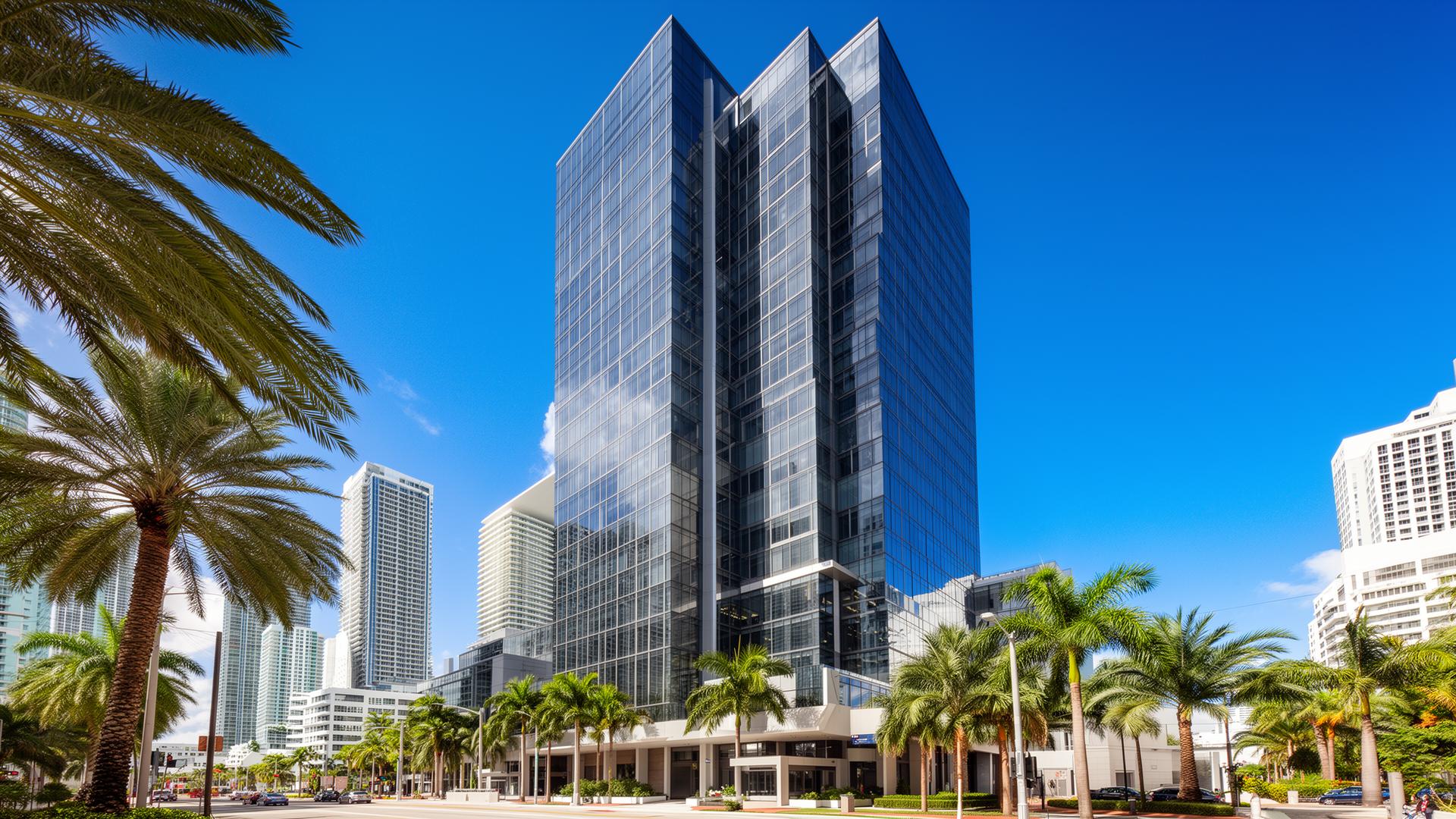
Brickell: Miami's Financial District Office Market
Brickell is a financial and professional services hub in Miami. The neighborhood has Class A office space and attracts banks, law firms, hedge funds, and technology companies.
Brickell office market highlights:
- Class A and Class B office inventory
- Occupancy varies by building; review current rent rolls and comparable properties
- Asking rents vary by building class, location, and lease terms; review recent comparable leases
- Interest from relocating financial firms and family offices
- Mixed-use developments integrating office, residential, and retail
The Miami Downtown Development Authority continues to invest in Brickell's public infrastructure and transit connectivity, further strengthening the submarket's institutional profile. For investors seeking an office building for sale in Brickell, the submarket offers long-term appreciation potential backed by institutional demand fundamentals.
Coral Gables: The City Beautiful's Office Market
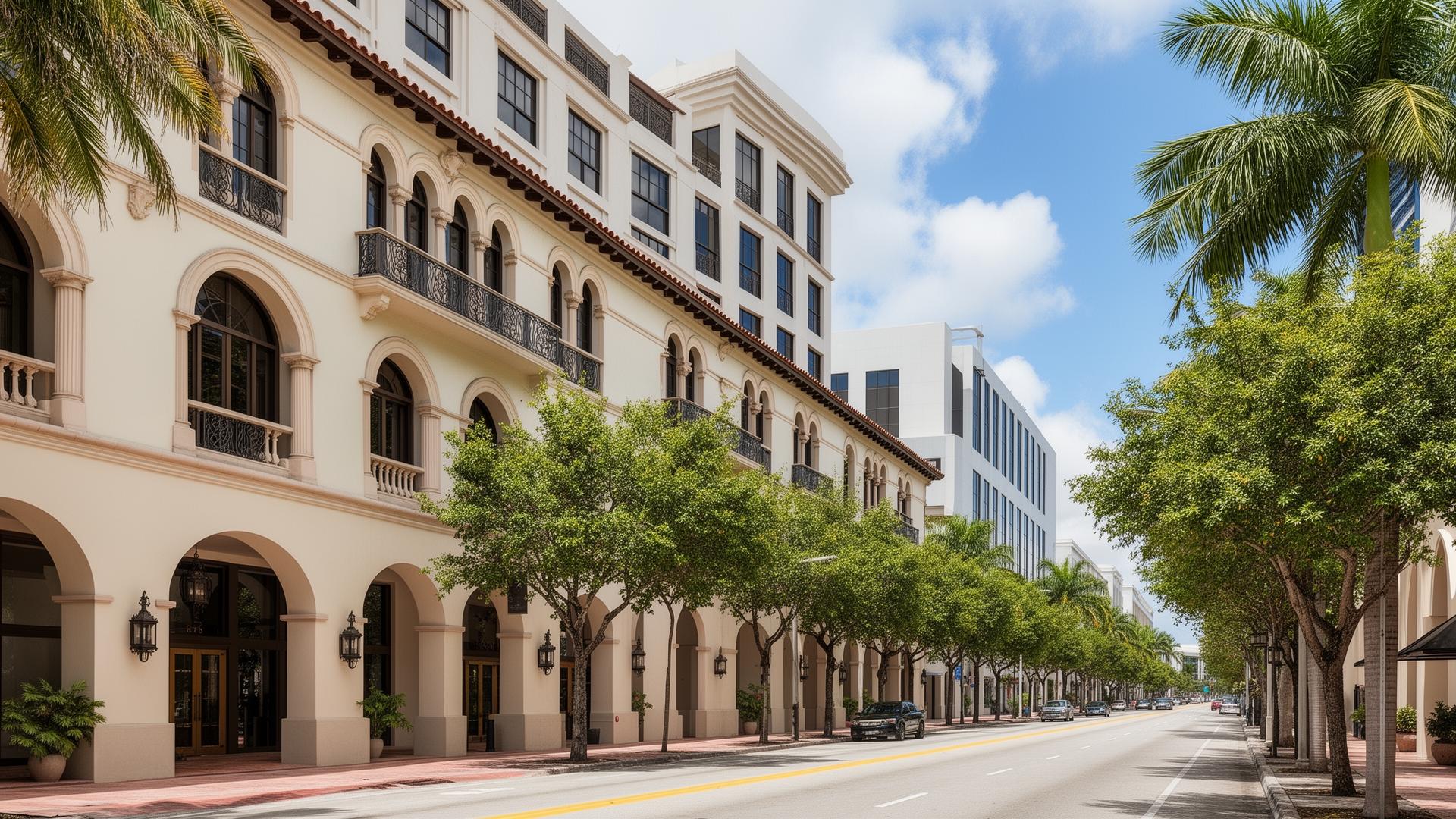
Coral Gables offers a distinctly different office investment profile than Brickell. Known as "The City Beautiful," Coral Gables combines Mediterranean architectural character with sophisticated zoning and high barriers to entry for new development.
Key market characteristics:
- Office inventory includes Class A and B properties
- Asking rents vary by building class, location, lease terms and amenities; review recent comparable leases
- Strong multinational corporate presence (Latin American headquarters)
- University of Miami's economic engine driving professional services demand
- Strict zoning preserving neighborhood character and limiting supply
Coral Gables appeals to investors seeking stable, institutional-quality assets in a supply-constrained environment. The City of Coral Gables Economic Development department actively supports business growth while the strict zoning framework limits new competition and may support existing asset values. See our Coral Gables commercial real estate page for more.
Office Investment Valuation Metrics
Definition: Office building valuation relies on income capitalization (NOI ÷ cap rate), comparable sales analysis, and replacement cost methodology. Most institutional investors use discounted cash flow (DCF) models for detailed return analysis.
Cap rate considerations:
- Brickell Class A: Review recent comparable sales and tenant credit quality.
- Brickell Class B: Assess lease terms and capital expenditure needs.
- Coral Gables Class A: Review recent comparable sales and occupancy.
- Coral Gables Class B: Assess building condition and rent rolls.
Beyond cap rates, investors should evaluate price per square foot, occupancy cost ratios, tenant credit quality, and weighted average lease term (WALT). For a comprehensive framework, review our guide on average cap rates for Miami commercial properties.
Corporate Relocations Fueling Office Demand
Miami's emergence as a corporate relocation destination has fundamentally shifted the office demand landscape. Companies and executives relocating from New York, Chicago, and San Francisco bring institutional leasing demand and premium rent tolerance.
Notable relocation trends:
- Financial firms: Citadel, Goldman Sachs, and numerous hedge funds expanding Miami presence
- Technology companies: Microsoft, Spotify, and emerging tech firms establishing offices
- Family offices: Concentration of wealth management firms in Brickell and Coconut Grove
- International headquarters: Latin American operations centers in Coral Gables
These relocations create sustained demand for quality office space and support rental growth projections in both submarkets, reinforcing the investment case for commercial property for sale in Miami.
Value-Add Office Investment Strategies
Value-add office investment in Brickell and Coral Gables typically involves acquiring underperforming buildings and repositioning them to capture higher rents and occupancy.
Common value-add tactics:
- Lobby and common area modernization
- Building systems upgrades (HVAC, elevators, life safety)
- Amenity additions (fitness centers, conference facilities, outdoor spaces)
- Speculative suite construction for small tenants
- Sustainability certifications (LEED, ENERGY STAR)
- Technology upgrades (smart building systems, high-speed connectivity)
Repositioning outcomes depend on tenant demand, renovation costs, and lease-up timing. Underwriting these opportunities requires detailed capital expenditure budgeting and realistic lease-up timelines.
Office Leasing Structure and Tenant Analysis
Understanding office lease structures is essential for evaluating office investment opportunities. In Miami, most office leases follow gross or modified gross structures.
Key lease terms to analyze:
- Base rent: Fixed annual rent per square foot
- Expense stop: Landlord's base year expense obligation; tenant pays increases above this level
- Tenant improvements: Costs depend on the space's condition and buildout scope; review contractor estimates and lease allowances
- Free rent: Negotiated concessions vary; review their duration and effect on effective rent
- Lease term: 5–10 years typical for professional tenants; 3–5 years for small businesses
Investors should calculate effective rent (accounting for TI, free rent, and commissions) rather than relying solely on face rent when comparing investment opportunities.
Financing Office Building Acquisitions
Financing for office acquisitions in Brickell and Coral Gables depends on the property, borrower and lender. Available options include:
- CMBS loans: May offer non-recourse financing for stabilized multi-tenant buildings
- Life company loans: Financing for institutional-quality Class A assets
- Bank loans: Relationship lending from local and regional banks
- Bridge financing: For value-add acquisitions requiring lease-up
Understanding how debt and equity fit together in the capital stack is critical for optimizing returns on office investments.
Partnering with Supreme CRE for Office Investments
Supreme Capital Commercial Real Estate Miami provides comprehensive advisory services for office building buyers and sellers across Brickell, Coral Gables, and greater Miami-Dade County.
Our office investment services include:
- Acquisition sourcing and off-market deal flow
- Financial underwriting and return analysis
- Due diligence management and coordination
- Lease analysis and tenant credit evaluation
- Disposition advisory and sale execution
Contact our commercial real estate brokers to discuss office investment opportunities in Miami's premier submarkets.
Related Resources
Frequently Asked Questions
What is the average price per square foot for office buildings in Brickell?
Office building prices per square foot in Brickell vary with building age, condition, and occupancy; review recent comparable sales and county property appraiser records for relevant pricing. Corporate relocations and the concentration of financial services firms in Miami's urban core can also influence demand.
Pricing per square foot is influenced by building class, floor plate efficiency, parking ratio, and remaining weighted average lease term (WALT). Newly constructed or recently renovated Class A towers may command higher per-SF pricing, particularly those with LEED certification and modern amenity packages. Investors should compare price per SF alongside cap rates and NOI per SF to develop a comprehensive valuation assessment.
Are office buildings in Miami a good investment?
Yes, particularly in Brickell and Coral Gables where corporate relocations from high-tax states, limited new supply, and strong institutional tenant demand support occupancy and rent growth. Miami's emergence as a financial and technology hub has fundamentally shifted the demand profile for Class A office space.
The investment case is strongest for well-located, institutional-quality buildings with diverse tenant rosters and modern building systems. Investors should be selective—properties with significant near-term lease rollover or deferred maintenance carry execution risk that must be reflected in pricing. The absence of Florida state income tax amplifies after-tax returns relative to comparable office investments in New York, California, or Illinois.
What cap rates should I expect for Miami office investments?
Miami office cap rates vary by property and submarket. Review recent comparable sales, rent rolls, and a broker opinion of value when assessing potential yields.
Cap rate selection depends on tenant credit quality, remaining lease term, building condition, and submarket fundamentals. Tenant credit, lease structure, and management needs can affect yields. Investors should test exit cap rate assumptions against comparable sales and potential changes in market conditions.
What is driving office demand in Miami?
Corporate relocations from high-tax states—particularly New York, Connecticut, and California—are the primary demand driver. Major financial firms including Citadel, Goldman Sachs, and numerous hedge funds have expanded or relocated operations to Miami, creating institutional-grade leasing demand for Class A office space.
Beyond relocations, Miami's growing technology sector, concentration of family offices in Brickell and Coconut Grove, and status as the gateway to Latin American commerce generate diversified demand across multiple industries. The University of Miami's economic engine and Coral Gables' multinational corporate presence add additional depth to the tenant base.
How do I finance an office building purchase in Miami?
Financing options include CMBS loans for stabilized multi-tenant buildings, life company loans for qualifying assets, bank loans, and bridge financing for value-add acquisitions requiring lease-up; terms depend on the property, borrower, and lender.
The optimal financing structure depends on the investment strategy and hold period. Stabilized core acquisitions benefit from long-term fixed-rate debt, while value-add plays typically use short-term bridge loans with interest-only payments during the repositioning period. Investors should model multiple financing scenarios to understand how leverage impacts cash-on-cash returns and overall risk exposure across different interest rate environments.
What are typical office lease terms in Brickell?
Professional tenants in Brickell negotiate lease terms and annual rent escalations based on their space needs and the property. Smaller tenants and startups may sign 3–5 year terms with renewal options. Tenant improvement allowances depend on the space condition, buildout scope, and lease negotiations.
Free rent concessions may be negotiated as part of a lease. Investors should calculate effective rent—which accounts for TI costs, free rent, and leasing commissions—rather than relying solely on face rent when comparing investment opportunities. Buildings with shorter WALT carry re-leasing risk but may offer mark-to-market upside if current rents are below market levels.