
South Florida Commercial Real Estate Outlook
Published · Updated · 8 min read
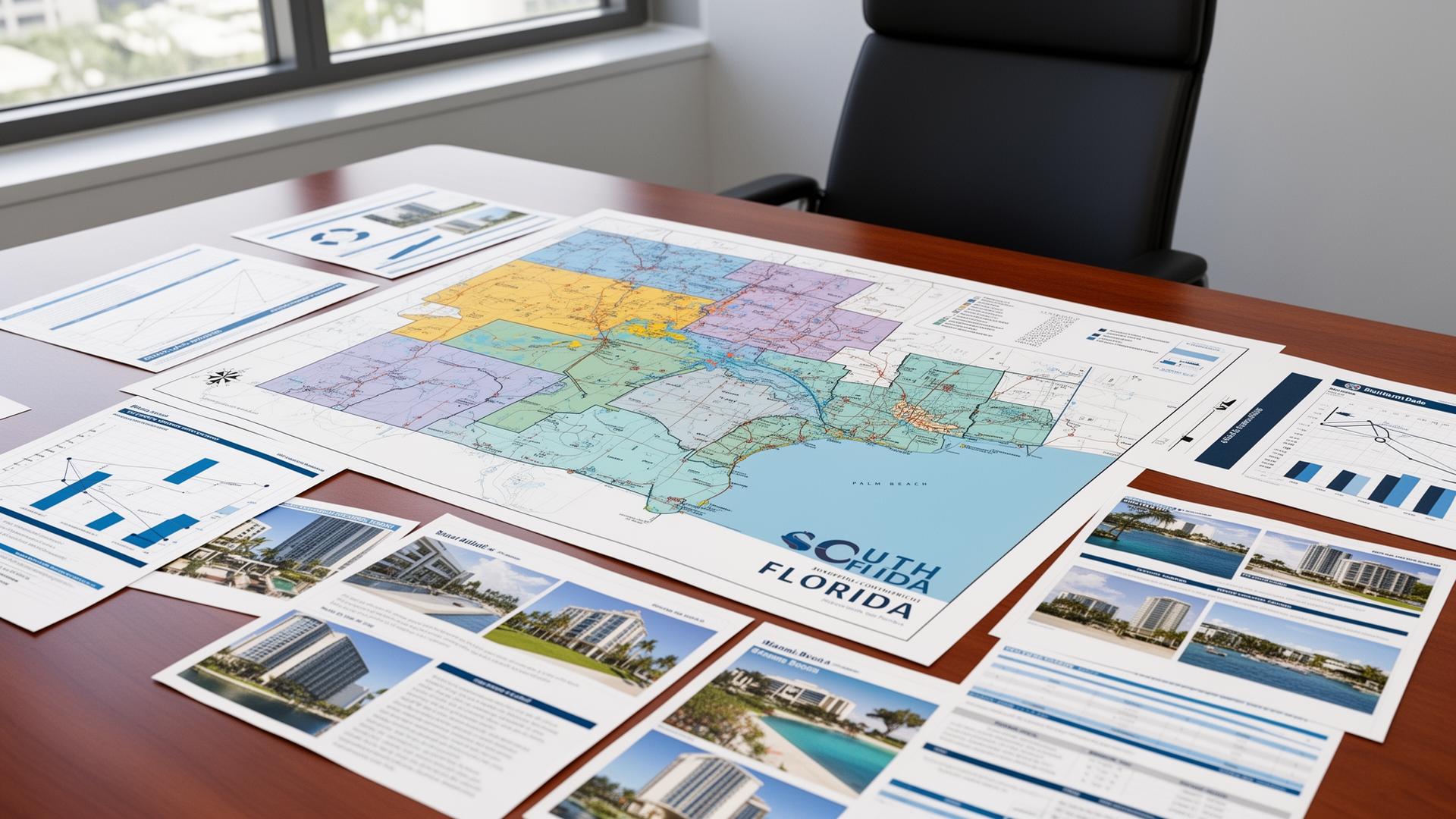
South Florida's tri-county commercial real estate market—encompassing Miami-Dade, Broward, and Palm Beach counties—represents one of the fastest-growing commercial property markets in the United States. Robust economic diversification, and sustained capital inflows support strong fundamentals across all asset classes. This outlook examines market conditions, growth drivers, and investment opportunities across the region.
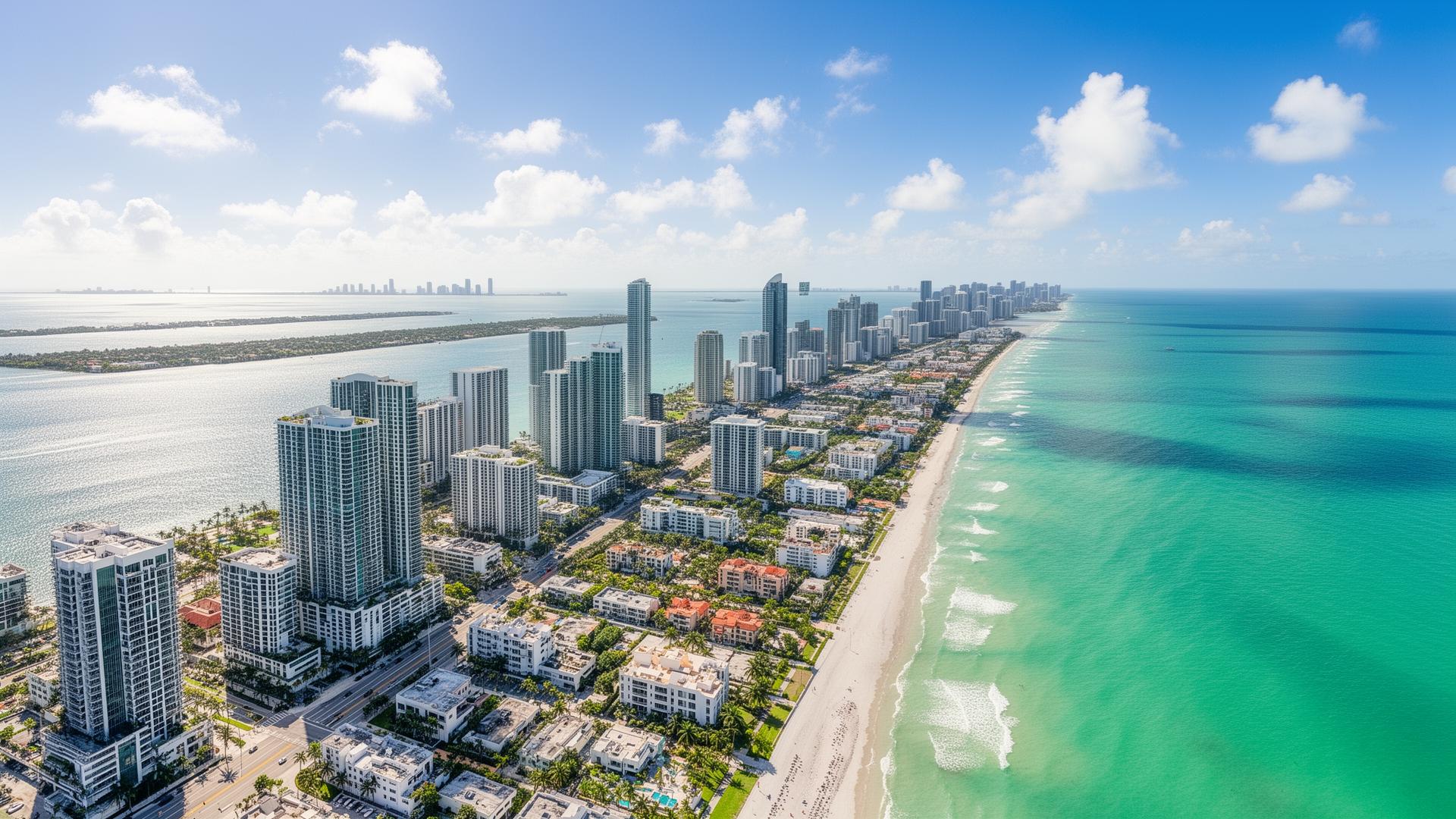
South Florida Commercial Real Estate Market Overview
South Florida's commercial real estate market has evolved from a seasonal, tourism-dependent economy into a diversified metropolitan region attracting corporate headquarters, technology firms, and financial institutions. The tri-county area (Miami-Dade, Broward, Palm Beach) functions as an interconnected economic region with distinct submarket characteristics.
Regional overview:
- Miami-Dade: International gateway, pricing varies by asset class and submarket
- Broward (Fort Lauderdale): Value alternative to Miami with strong corporate presence and growing tech sector
- Palm Beach: Wealth management hub attracting financial firms and luxury office demand from West Palm Beach
Together, these counties form a large, interconnected commercial property market. For Miami-specific analysis, see our commercial real estate Miami overview.
Economic Drivers Supporting Commercial Growth
South Florida's commercial real estate fundamentals are underpinned by powerful economic drivers:
Population and Migration
Domestic migration and international immigration can contribute to population growth in South Florida. This growth creates sustained demand for all commercial property types—from office space for new businesses to industrial facilities for goods distribution and retail for consumer spending.
Corporate Relocations
The relocation of corporate headquarters, regional offices, and wealth management firms from New York, Connecticut, and California has transformed South Florida's office market. Companies consider Florida's tax environment, quality of life, and growing talent pool. Consult a qualified tax adviser about individual circumstances.
International Trade Gateway
Trade with Latin America and the Caribbean can drive industrial demand in Miami-Dade and northern Broward County. PortMiami and Port Everglades serve as complementary international trade gateways.
Tourism and Hospitality
Visitors support retail, restaurant, and hospitality-related commercial demand across the tri-county area, particularly in Miami Beach, Fort Lauderdale, and beachfront commercial corridors.
Office Market Performance Across South Florida
Office markets across South Florida show varying performance by submarket:
Miami-Dade:
- Brickell/Downtown: Urban office market with institutional tenants
- Coral Gables: Office market with a concentration of professional services
- Doral: Office submarket serving logistics and international trade companies
Broward County:
- Fort Lauderdale CBD: Downtown office market serving corporate tenants
- Cypress Creek/I-95 corridor: Office market with access to I-95
- Sawgrass: Suburban campus environment serving technology and finance tenants
Palm Beach County:
- West Palm Beach: Office market serving financial and other businesses
- Boca Raton: Established corporate office market
Tenant preferences for newer, amenity-rich buildings can create repositioning challenges for older Class B/C properties. Compare recent leases and vacancy data by submarket and building class.
Industrial and Logistics Market Outlook
South Florida's industrial market varies by location, property features, supply, and tenant demand. Review current comparable leases and local market data when evaluating rents and vacancy:
- Miami-Dade: Doral and the Airport West corridor provide access to airport and logistics infrastructure
- Broward: Pompano Beach and the southwest corridor offer distribution locations with varying footprints and lease terms
- Palm Beach: Distribution opportunities depend on location, building specifications, and tenant demand
Regional industrial demand drivers:
- E-commerce last-mile distribution requiring positions in all three counties
- International trade processing through MIA, PortMiami, and Port Everglades
- Nearshoring supply chain restructuring favoring South Florida gateway position
- Construction and building materials distribution supporting regional development
Industrial supply depends on the development pipeline, land availability, and construction costs. For detailed Doral industrial analysis, see our Doral absorption report.
Multifamily and Retail Market Trends
Multifamily: South Florida's apartment market benefits from population growth, homeownership affordability challenges, and lifestyle preferences favoring rental living. Key trends include:
- Occupancy rates: Review property-level occupancy and comparable properties
- Rent growth: Compare rent rolls and recent leases, considering location and new supply
- Insurance cost pressure: Rising premiums impacting NOI growth, particularly for coastal properties
- New supply: Concentrated in Miami's urban core and West Palm Beach, creating near-term absorption risk
Retail: South Florida's retail sector demonstrates resilience driven by tourism, population density, and consumer spending:
- Experiential retail: Restaurants, fitness, entertainment concepts driving leasing activity
- Grocery-anchored centers: Stable performance with institutional investor demand
- High-street retail: Rents in Wynwood, Lincoln Road, and Las Olas vary by location and lease terms
- NNN retail: Single-tenant properties attract 1031 exchange and passive investors. Consult a qualified tax adviser and see the IRS like-kind exchange guidance.
Both sectors present compelling investment opportunities for properly positioned acquisitions. Visit our commercial property investment page for guidance.
Investment Outlook and Capital Flows
South Florida's investment outlook depends on economic growth, property performance, and investor demand:
- Transaction volume: Review recent comparable sales and county property appraiser records to assess activity across the tri-county area
- Buyer composition: Mix of institutional investors, private equity, family offices, and international buyers
- Cap rate trends: Compare recent sales and property income to assess pricing
- Development activity: Review proposed construction and its potential impact on supply
Investment themes to watch:
- Industrial acquisitions in logistics corridors, informed by recent absorption data
- Office value-add in secondary submarkets, considering spillover demand
- Multifamily repositioning targeting workforce housing demand
- Retail recapitalization, informed by comparable sales and cap rates
For personalized investment strategy and market analysis, contact Supreme Capital Commercial Real Estate Miami for a consultation.
Related Resources
Frequently Asked Questions
What counties make up South Florida's commercial real estate market?
South Florida's commercial market encompasses Miami-Dade, Broward (Fort Lauderdale), and Palm Beach counties, forming a tri-county metropolitan area. The region functions as an interconnected economic unit with distinct submarket characteristics in each county.
Miami-Dade serves as the international gateway with premium pricing, Broward provides a value alternative with growing corporate presence, and Palm Beach has emerged as a wealth management and financial services hub. Together they represent one of the most dynamic commercial real estate regions in the United States.
Which South Florida submarket has the strongest growth?
Miami-Dade leads overall growth intensity, with Brickell/Downtown for office (highest rents and corporate relocation demand), Doral for industrial (tightest vacancy and strongest rent growth in the Southeast), and Wynwood for experiential retail. West Palm Beach is the fastest-growing office submarket regionally, driven by financial services relocations.
Growth dynamics differ by property type—industrial growth is strongest in Doral and the MIA corridor, office growth is led by Brickell and West Palm Beach, and retail growth centers on high-traffic urban corridors like Wynwood and Lincoln Road. Investors should match submarket selection to their target property type and investment strategy.
Is South Florida commercial real estate overpriced?
While pricing has risen significantly, South Florida's structural growth drivers—population migration, corporate relocations, international capital flows, and no state income tax—support current valuations with continued appreciation potential. The market's growth rate has exceeded most U.S. metros, justifying pricing premiums over historical averages.
Selective buying at appropriate risk-adjusted pricing remains attractive, particularly in industrial (supported by structural demand growth), value-add office (benefiting from submarket transformation), and workforce multifamily (driven by population growth and housing affordability gaps). Investors should focus on assets with provable income growth trajectories rather than relying solely on cap rate compression.
How does South Florida compare to other U.S. commercial markets?
South Florida's comparison with other U.S. markets depends on the asset class, submarket and period reviewed; use dated, sourced data for the specific comparison. It ranks among the top 5 markets nationally for commercial real estate investment transaction volume, surpassing traditional gateway cities in growth metrics while maintaining institutional-quality market infrastructure.
Compared to New York, San Francisco, and Chicago, South Florida offers superior population growth, more favorable tax treatment (no state income tax), and comparable institutional market depth. The region's combination of gateway-market liquidity with sunbelt-market growth creates a compelling risk-adjusted return profile.
What are the biggest risks in South Florida commercial real estate?
Key risks include insurance cost escalation, climate and flood exposure for coastal properties, potential oversupply in luxury multifamily and condo segments, and interest rate sensitivity affecting property valuations and transaction volume.
These risks are manageable through portfolio diversification, thorough underwriting, adequate insurance reserves, and strategic asset selection favoring inland locations with lower climate exposure. Population migration, business formation, and capital flows can affect demand and may offset some cyclical and environmental risks.
Where should I invest in South Florida commercial real estate?
Top opportunities include Doral industrial (strongest risk-adjusted returns driven by structural logistics demand), Brickell/Downtown office (institutional demand and corporate relocations), suburban multifamily (population growth and housing affordability gaps), and grocery-anchored retail (stable income with defensive characteristics).
The optimal strategy depends on your risk tolerance, return objectives, and investment timeline. Core investors seeking stable income should focus on credit-tenant industrial and NNN retail. Value-add investors seeking higher returns should target office repositioning in improving submarkets and multifamily renovation in high-demand rental markets.